
Why We Love On Our City: Because the Gospel Has a Zip Code
At Crossover, we believe the church is not just located in the city.
We are called to love the city.
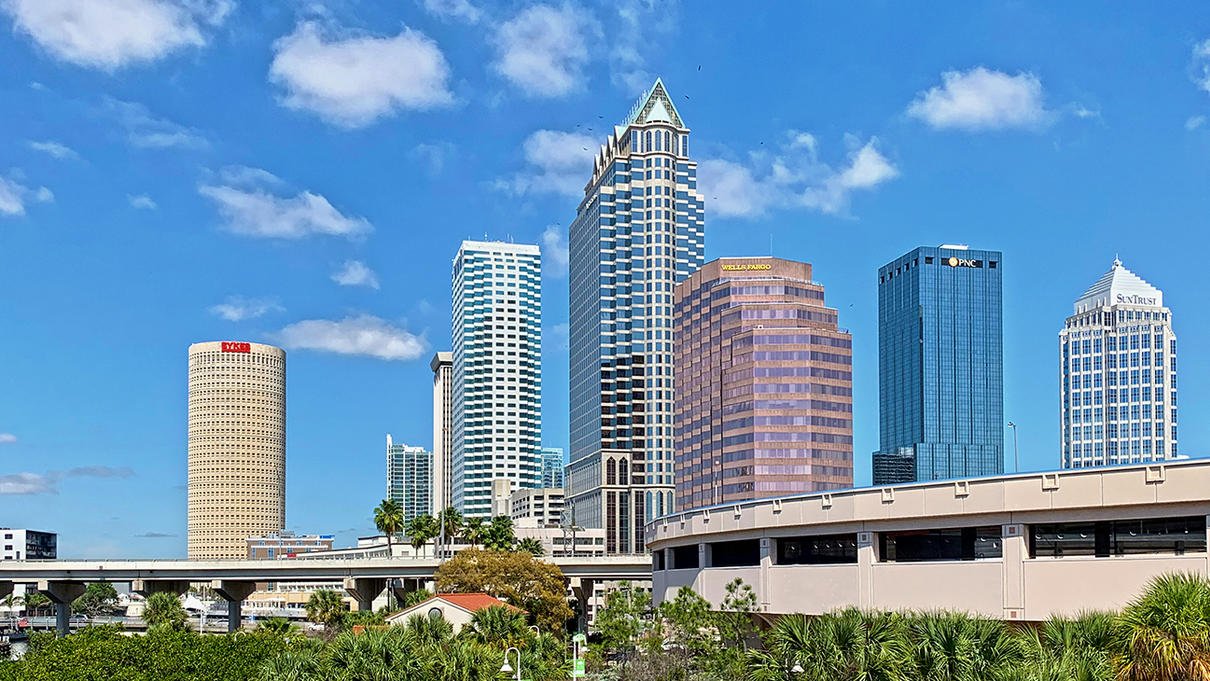
That means we do not see Tampa as just the place where our building sits, where our services happen, or where people drive in and out on Sundays. We see our city as a place filled with people God loves, stories God sees, pain God cares about, and possibilities God can redeem.
We love on our city because Jesus loves people.
We love on our city because God cares about neighborhoods.
We love on our city because the gospel is not just something we believe inside the church. It is something we live outside the church.
A healthy disciple does not only ask, “How do I grow spiritually?”
A healthy disciple also asks, “How can my life become good news to the people around me?”
Real Talk: The Church Should Be Good News to the Neighborhood
Jesus said:
“You are the light of the world. A city set on a hill cannot be hidden.”
Matthew 5:14 (ESV)
That is a powerful image.
Light is not meant to be hidden. Light is meant to help people see.
The church is called to shine in a way that points people to God. Not with arrogance. Not with noise. Not with empty religious talk. But with visible love, faithful presence, good works, truth, mercy, justice, generosity, and hope.
Jesus continues:
“Let your light shine before others, that they may see your good deeds and glorify your Father in heaven.”
Matthew 5:16 (NIV)
Notice the connection: visible good works should lead people to glorify the Father.
That means our love for the city is not a marketing strategy. It is worship. It is witness. It is discipleship with shoes on.
If a church disappears from a neighborhood, the community should feel the loss.
Not because the church was famous, but because the church was faithful.
God Told His People to Care About the City
When God’s people were living in exile in Babylon, He gave them surprising instructions through the prophet Jeremiah:
“Seek the peace and prosperity of the city to which I have carried you into exile. Pray to the LORD for it…”
Jeremiah 29:7 (NIV)
That is not what many people would expect.
God did not tell them to hate the city, hide from the city, or only complain about the city.
He told them to seek its welfare and pray for it.
That matters for us.
We may not agree with everything happening in our city. We may see brokenness, injustice, poverty, violence, loneliness, addiction, family strain, housing pressure, educational gaps, and spiritual confusion. But the presence of problems does not cancel our assignment to love.
We do not love the city because the city is perfect.
We love the city because God has placed us here with purpose.
We pray for Tampa.
We serve Tampa.
We build relationships in Tampa.
We care about families in Tampa.
We want schools to flourish.
We want neighborhoods to be strengthened.
We want children to be safe.
We want people to know Jesus.
We want the Kingdom of God to become visible where we live.
Jesus Never Loved From a Distance
One of the beautiful things about Jesus is that He moved toward people.
He did not love humanity as an abstract idea. He loved real people in real places with real needs.
He noticed the sick.
He welcomed children.
He touched lepers.
He ate with outsiders.
He listened to the hurting.
He engaged the spiritually curious.
He fed hungry crowds.
He stopped for people others overlooked.
Matthew says:
“When he saw the crowds, he had compassion on them, because they were harassed and helpless, like sheep without a shepherd.”
Matthew 9:36 (NIV)
That phrase “He had compassion” is not sentimental. It means Jesus was moved deeply.
Christlike love is not cold. It is not detached. It is not content to stay comfortable while people are hurting.
If we follow Jesus, we cannot be indifferent to the city around us.
Loving the City Means Seeing People, Not Problems
Sometimes cities get talked about only through their problems.
Crime.
Traffic.
Poverty.
Politics.
Schools.
Housing.
Division.
Noise.
Development.
Displacement.
Struggle.
Those things are real, and we should not ignore them. But people are not problems to solve. They are neighbors to love.
Every neighborhood is full of image-bearers.
Genesis says:
“So God created mankind in his own image…”
Genesis 1:27 (NIV)
That means every person we encounter has God-given dignity.
The single mom is not a project.
The teenager is not a statistic.
The person experiencing homelessness is not an inconvenience.
The returning citizen is not their worst mistake.
The immigrant family is not a headline.
The senior citizen is not forgotten.
The child in need is not a burden.
The skeptic is not the enemy.
They are people God sees.
To love on our city means we ask God to give us eyes that see dignity before difficulty.
We Love Through Presence, Not Just Programs
Programs can be good. Outreach events can be good. Giveaways can be good. Service days can be good.
But lasting love requires presence.
Presence says, “We are not just passing through.”
Presence says, “We are not here only when it benefits us.”
Presence says, “We want to know your name.”
Presence says, “We are willing to listen before we assume.”
Presence says, “We care beyond the photo opportunity.”
Presence says, “We are here for the long haul.”
The incarnation teaches us this.
John writes:
“The Word became flesh and made his dwelling among us.”
John 1:14 (NIV)
Jesus did not love us from a distance. He came near.
He entered human history. He lived among people. He experienced grief, hunger, temptation, rejection, friendship, work, worship, pain, and community.
If Jesus loved by coming near, the church must also learn the ministry of nearness.
We love on our city by being present in schools, neighborhoods, community events, homes, hospitals, businesses, parks, and everyday spaces where people live real life.
Loving the City Is Not the Same as Loving the World’s Values
Someone may ask, “If we love the city, does that mean we affirm everything in the city?”
No.
Biblical love is not the same as agreement. Jesus loved people without compromising truth. He was full of grace and truth. John 1:14 (ESV).
We can love our city and still call people toward God’s Kingdom.
We can serve people without surrendering conviction.
We can build relationships without diluting the gospel.
We can be compassionate without being confused.
We can speak truth without being cruel.
The church should not be isolated from the city, and the church should not be absorbed by the city. We are called to be a faithful presence in the city.
Jesus prayed for His disciples:
“My prayer is not that you take them out of the world but that you protect them from the evil one.”
John 17:15 (NIV)
That is our tension.
We are in the world, but we belong to Christ.
We love the city, but we are shaped by the Kingdom.
Biblical Example: Nehemiah Cried, Prayed, and Built
Nehemiah gives us a powerful picture of city love.
When he heard that Jerusalem’s walls were broken down and its gates had been burned, he did not shrug it off. He wept. He mourned. He fasted. He prayed. Then he took action.
Nehemiah 1:4 says:
“When I heard these things, I sat down and wept. For some days I mourned and fasted and prayed…”
Nehemiah 1:4 (NIV)
Nehemiah’s love moved from burden to prayer to action.
That is city love.
It is not just emotion.
It is not just criticism.
It is not just frustration.
It is not just wishing things were better.
It is a holy burden that says, “God, what do You want me to do?”
Some people complain about the broken walls.
Some people ignore the broken walls.
Some people benefit from the broken walls.
But Kingdom people ask God how to help rebuild.
The Culture Says “Mind Your Business.” Jesus Says “Love Your Neighbor.”
Our culture often teaches us to stay in our lane, protect our circle, and focus only on our own life.
But Jesus tells a different story.
When asked, “Who is my neighbor?” Jesus told the parable of the Good Samaritan. A man was beaten and left on the road. Religious people passed by. But the Samaritan stopped, moved toward the pain, treated the wounds, used his resources, and followed up with care.
Then Jesus asked which person was a neighbor.
The answer:
“The one who had mercy on him.”
Luke 10:37 (NIV)
Then Jesus said:
“Go and do likewise.”
Luke 10:37 (NIV)
That is the call.
Loving our city means we do not walk past the pain God is calling us to notice.
It means our neighbor is not just the person who looks like us, votes like us, worships like us, earns like us, or grew up like us.
Our neighbor is the person God places in our path.
Questions People May Be Asking
“Why should the church care about the city?”
Because God cares about people, and people live in places.
The gospel is not disconnected from neighborhoods, schools, families, jobs, justice, safety, housing, hunger, loneliness, and hope. Jesus came into the real world, and He sends His people into the real world.
A church that loves Jesus should care about what affects the people Jesus loves.
“Isn’t the church’s job just to preach the gospel?”
Preaching the gospel is central. We should never lose that.
But the gospel we preach should shape the life we live. Jesus proclaimed the Kingdom and demonstrated Kingdom compassion. The early church preached Christ and practiced radical generosity.
Word and deed belong together.
We speak the gospel clearly, and we show the gospel visibly.
“What if the city does not respond?”
We are not called to control outcomes. We are called to be faithful.
Some seeds take time. Some trust takes time. Some relationships take time. Some wounds take time.
Love does not quit just because results are not immediate.
“How can I love the city if I feel overwhelmed by its needs?”
Start small and start local.
Pray for one street. Serve one school. Encourage one neighbor. Mentor one student. Support one family. Join one outreach. Learn one community need. Have one conversation.
You do not have to do everything to do something.
How We Can Walk This Out
Pray for Tampa by name.
Learn the needs of your neighborhood instead of assuming them.
Support local schools, families, and community organizations.
Show up consistently, not just when there is a big event.
Serve with humility and dignity.
Build relationships across cultures, generations, and economic backgrounds.
Practice hospitality. Invite people to the table.
Ask God, “Who is my neighbor, and how can I love them well?”
Let your home, workplace, business, ministry, classroom, and schedule become places where the love of Jesus becomes visible.
The Core Truth
We love on our city because God loves the city.
We love because Jesus came near.
We love because people bear God’s image.
We love because the gospel is public good news.
We love because the Kingdom is bigger than our building.
We love because the church is called to shine.
A healthy church does not only gather in the city.
A healthy church blesses the city.
Closing Encouragement
Tampa does not need a church that only takes up space.
Tampa needs a church that prays, serves, listens, builds, welcomes, disciples, and loves with the heart of Jesus.
So let’s love our city with humility.
Let’s love with consistency.
Let’s love with creativity.
Let’s love with truth and grace.
Let’s love across generations and cultures.
Let’s love in ways people can feel.
Because the gospel has a zip code.
And by God’s grace, we are called to display His love right here.
This is what healthy disciples do: we discover who Jesus is, develop into who He called us to be, and display His love in the real world.
Closing Prayer
Father, give us Your heart for our city. Teach us to pray for Tampa, serve Tampa, and love Tampa with humility, wisdom, and courage. Open our eyes to the people and places You are calling us to notice. Make our church a faithful presence that reflects the compassion, truth, and hope of Jesus. Amen.