
Abiding in Jesus: Following Jesus Before Doing Things for Jesus
At Crossover, we believe a healthy disciple is someone who walks daily with Jesus.
Not just on Sundays. Not just when life is falling apart. Not just when the worship team sings your favorite song. And not just when you need God to fix something.
A healthy disciple learns how to stay connected to Jesus in everyday life: in the car, at work, in the kitchen, at school, in the group chat, while raising kids, paying bills, handling pressure, making decisions, and trying to become whole.
This first mark is called Abiding in Jesus.
And it may be the most important mark because everything else flows from it.
Before we serve well, lead well, love well, forgive well, give well, or witness well, we have to learn how to stay close to Jesus.
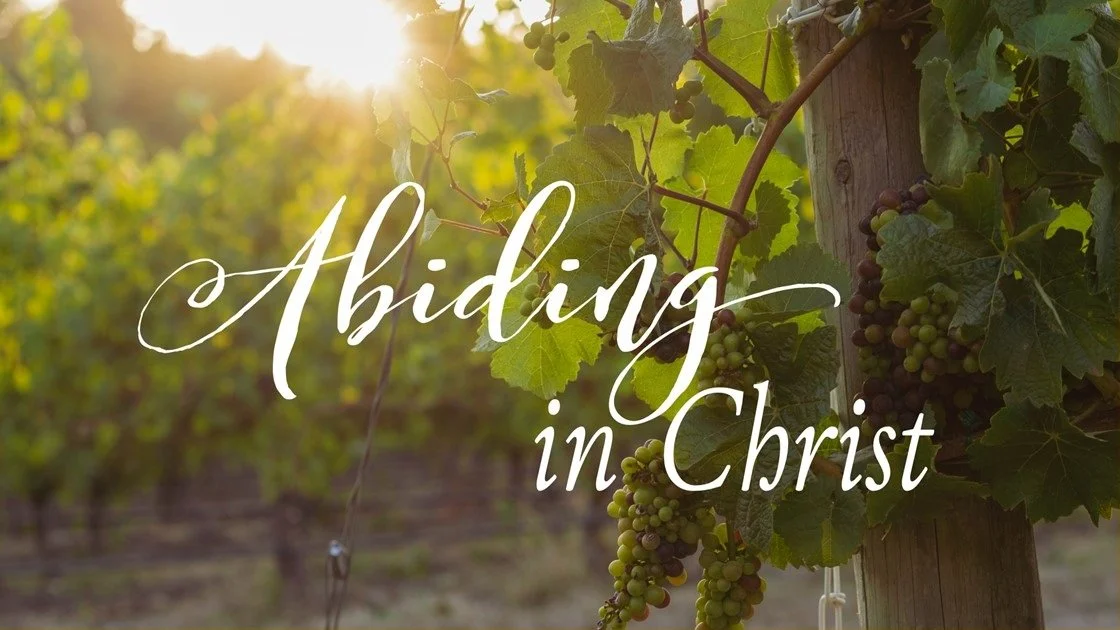
What Does It Mean to Abide in Jesus?
Jesus said:
“Abide in me, and I in you. As the branch cannot bear fruit by itself unless it abides in the vine, neither can you, unless you abide in me.”
John 15:4
To abide means to remain, stay connected, dwell, continue, and live in relationship.
Jesus gives us the picture of a branch connected to a vine. A branch does not produce fruit by trying harder. It produces fruit by staying connected to its source.
That is discipleship.
A healthy disciple is not simply someone who is busy for God. A healthy disciple is someone who is connected to God.
There is a difference.
You can be active in church and still be disconnected from Jesus. You can serve every week and still be spiritually dry. You can know church language and still have an unnourished soul.
Jesus does not invite us into religious performance. He invites us into living relationship.
He also says:
“Apart from me you can do nothing.”
John 15:5
That does not mean we cannot be talented, productive, impressive, or successful apart from Him. It means we cannot produce the kind of fruit that glorifies God and forms Christ in us apart from Him.
We may produce activity, attention, and results.
But only abiding produces lasting spiritual fruit.
Why This Matters
Abiding matters because the world is constantly discipling us. To say that something is discipling us is to say that it is teaching us, training us, and shaping how we live our lives.
Our phones disciple us.
Our trauma can disciple us.
Our ambition can disciple us.
Our anxiety can disciple us.
Our favorite influencers can disciple us.
Our political feeds can disciple us.
Our family patterns can disciple us.
Even our pain can disciple us when we never bring it to Jesus.
Everybody is being formed by something.
The question is not, “Am I being discipled?”
The better question is, “What is discipling me?”
Abiding in Jesus means we intentionally allow Christ to become the primary voice, source, shepherd, and center of our lives.
In an urban, fast-moving, multi-generational, culturally diverse context, this matters deeply. Many people are trying to survive, succeed, provide, heal, build, and keep it all together.
Life can be loud. Bills are loud. Deadlines are loud. Family needs are loud. Injustice is loud. Social media is loud. Grief is loud. Opportunity is loud. Temptation is loud.
But Jesus still says:
“Come to me, all who labor and are heavy laden, and I will give you rest.”
Matthew 11:28
We love how the Message Translation lays this out. Matthew 11: 29-30 (Message) says, “Are you tired? Worn out? Burned out on religion? Come to me. Get away with me and you’ll recover your life. I’ll show you how to take a real rest. Walk with me and work with me—watch how I do it. Learn the unforced rhythms of grace. I won’t lay anything heavy or ill-fitting on you. Keep company with me and you’ll learn to live freely and lightly.”
Abiding is how we remember that Jesus is not just another task on the schedule. He is the source of life. In fact, He wants to SHAPE our life and living.
What Abiding Looks Like in Everyday Life
Abiding in Jesus does not have to be complicated. It is not reserved for pastors, theologians, retirees, or people with quiet houses. It is not just reserved for people with degrees or seminary or been with Jesus a long time.
Abiding looks like learning to return to Jesus throughout the day.
It can look like opening your Bible before opening your inbox.
It can look like praying in the car before walking into work.
It can look like whispering, “Lord, help me respond like You,” before entering a hard conversation.
It can look like taking five minutes to breathe, repent, and reset instead of reacting out of anger.
It can look like turning on worship music while cleaning the house.
It can look like fasting from something that has too much control over your attention.
It can look like reading one passage of Scripture and asking, “Jesus, what are You showing me?”
It can look like inviting Jesus into your parenting, dating, marriage, loneliness, work, grief, temptation, goals, and healing.
Abiding is not pretending life is peaceful.
It is staying connected to Jesus in the middle of real life.
Jesus Modeled This
One of the most powerful things about Jesus is that He lived with both urgency and intimacy.
Crowds needed Him. Disciples followed Him. Religious leaders challenged Him. Sick people reached for Him. Demons confronted Him. The mission was massive.
Yet Scripture says:
“And rising very early in the morning, while it was still dark, he departed and went out to a desolate place, and there he prayed.”
Mark 1:35
Jesus did not let public demand replace private communion.
That is a word for us.
We live in a culture that rewards visibility, productivity, platform, speed, and constant access. But Jesus shows us that spiritual power is cultivated in hidden places before it is displayed in public spaces.
Before Jesus chose the twelve, He prayed. Before He faced the cross, He prayed. When crowds pressed Him, He withdrew. When the mission intensified, He stayed connected to the Father.
If Jesus prioritized communion with the Father, how much more do we need daily time with Him?
Mary and Martha: A Picture of Abiding
Luke 10 gives us a powerful moment in the home of Mary and Martha.
Martha was busy serving. Mary was sitting at Jesus’ feet, listening to His teaching.
Martha was not doing something wrong. She was serving. But she became anxious, distracted, and frustrated.
Jesus told her:
“Martha, Martha, you are anxious and troubled about many things, but one thing is necessary.”
Luke 10:41–42
That phrase matters: one thing is necessary.
Jesus was not attacking service. He was correcting distraction.
Mary chose presence before performance.
Martha was doing things for Jesus while Mary was being with Jesus.
Both service and sitting matter. But sitting must come before serving, or our serving can become anxious, resentful, and self-focused.
This is one of the real dangers for church people. We can work around Jesus and still not be with Jesus.
Abiding keeps ministry from becoming mechanical.
Abiding keeps leadership from becoming ego-driven.
Abiding keeps service from becoming burnout.
Abiding keeps spiritual gifts connected to spiritual fruit.
A Modern Picture
Think about your phone.
You can have the best apps, the cleanest screen, the latest updates, and all the right features. But if the phone is not charged, eventually it shuts down.
A lot of people are trying to live on 3% spiritually.
Gifted, but drained. Present, but anxious. Serving, but resentful. Posting Scripture, but starving internally. Leading others, but barely breathing spiritually.
Abiding is not optional. It is how we stay spiritually alive.
The goal is not to impress people with how much we do. The goal is to stay connected to Jesus so His life is being formed in us.
How This Applies to Culture
Our culture often says:
“Hustle harder.”
“Build your brand.”
“Secure the bag.”
“Protect your peace.”
“Follow your truth.”
“Stay booked and busy.”
Some of that language points to real desires: provision, purpose, healing, excellence, and focus. But without Jesus, even good desires can become exhausting masters.
Abiding reminds us:
You are not just your productivity.
You are not just your pain.
You are not just your platform.
You are not just your relationship status.
You are not just your income.
You are not just what people think of you.
You are not just what you survived.
You belong to Christ.
In a culture that tells us to constantly perform, abiding teaches us to receive.
In a culture that tells us to constantly compare, abiding teaches us to rest.
In a culture that tells us to constantly react, abiding teaches us to listen.
In a culture that tells us to constantly chase, abiding teaches us to remain.
Questions People May Be Asking
“What if I’m too busy to spend daily time with Jesus?”
Start small, but start honestly.
Daily time with Jesus does not have to begin with two hours, a leather journal, and a perfect worship playlist. Start with ten intentional minutes. Read a passage. Pray honestly. Sit quietly. Ask God for wisdom. Take one verse with you into the day.
The issue is not always time. Sometimes it is attention.
Many of us do not need more hours. We need a reordered hunger.
“What if I don’t feel anything when I pray or read Scripture?”
That is normal sometimes.
Relationships are not built only on emotional highs. They are built through faithful presence.
Some days you will feel deeply connected. Other days you may feel dry, distracted, or tired. Keep showing up.
Psalm 1 says the blessed person meditates on God’s Word day and night and becomes like a tree planted by streams of water. Trees do not grow overnight. Roots develop slowly.
“Can I abide in Jesus even when my life is messy?”
Yes. Especially then.
Abiding is not for people who have everything together. It is for people who know they need Jesus.
You can abide while grieving, healing, rebuilding, repenting, parenting, working, waiting, or fighting through anxiety.
Jesus does not say, “Clean yourself up and then come remain in Me.”
He says, “Come.”
“How do I know if I’m actually abiding?”
Look for fruit.
Not perfection, but fruit.
Are you becoming more loving? More patient? More honest? More prayerful? More surrendered? More humble? More obedient? More aware of God? More able to respond instead of react?
Fruit is evidence of connection.
Practical Ways to Practice Abiding This Week
Start your day with surrender:
“Jesus, before I do anything for You, help me walk with You.”
Read one passage slowly. John 15:1–11 is a great place to begin.
Practice short prayers during the day:
“Jesus, keep me connected to You.”
“Holy Spirit, lead me.”
“Father, help me respond with love.”
Create a daily pause. Set a reminder at lunch or mid-afternoon to stop for two minutes and return your attention to God.
End the day with reflection:
“Where did I notice God today?”
“Where did I resist Him?”
“What do I need to surrender before I sleep?”
Choose one distraction to fast from for a short period. It may be social media, entertainment, constant news, unnecessary noise, or anything that is crowding out your awareness of God.
The Core Truth
Abiding in Jesus is not about adding religious pressure to your life.
It is about receiving the life of Christ.
Jesus is not calling us to be impressive branches. He is calling us to be connected branches.
The branch does not have to be the vine. The branch does not have to create the sap. The branch does not have to manufacture life.
The branch simply remains connected.
That is grace.
And from that connection, fruit comes.
Closing Encouragement
A healthy disciple walks daily with Jesus.
Not perfectly. Not performatively. Not only publicly.
But honestly, consistently, and dependently.
Because the goal of discipleship is not just to know more information, attend more services, or do more religious activity.
The goal is to become more like Jesus.
And that begins by staying close to Him.
This is what healthy disciples do: we discover who Jesus is, develop into who He called us to be, and display His love in the real world.
Closing Prayer
Jesus, help me abide in You. Teach me to walk with You daily, not just when life is hard or when I need something from You. Help me make room for Your Word, Your voice, Your presence, and Your correction. Keep me from being busy for You while disconnected from You. Shape my heart, renew my mind, guide my steps, and produce fruit in my life that brings glory to the Father. Amen.
RELEVANT SERIES:
Forgotten Virtues (2021)